A guest blog by Dr Georgi Gill, visiting fellow at the University of Edinburgh. This blog is in part drawn from Georgi’s introduction to poeMS: an anthology by people living with multiple sclerosis.
Finding poetry through the (brain) fog
How we do we communicate our experiences of chronic illness to others? Not just the medical symptoms that we tell a doctor, but the cracks in our identity that a long term, potentially degenerative, illness can cause.
When I was diagnosed with multiple sclerosis (MS) in 2003, I found it impossible to convey my lived experience to other people. My symptoms were invisible; I had – and still have – periods of brain fog, disrupted vision and overwhelming fatigue, but to everybody else I appear fine. For years I was isolated and had the overwhelming sense that I just wasn’t me anymore.
Eventually I turned to poetry, in an attempt to explore these peculiar sensations and emotions and later to communicate them to others. To my surprise, poetry worked. It worked better than prose. We expect prose to tell sensible narratives rooted in plot; novels and memoirs are structured in beginnings, middles and endings. Yet, peering at the page through blurry eyes and a foggy brain, I couldn’t say how MS would play out for me, and neither could my clearer-sighted doctors. Poems, however, dodged those expectations of knowledge and resolution. We may relate to a poem on a profound level sensually, emotionally and instinctually before we begin to understand what it might mean. I found it liberating to write into and through my MS experiences simply as an exploration in words to see what emerged. As time went on, I began to find a language to describe what I felt and how MS had shifted my relationship with the world around me.
Writing and researching with others
Ultimately these efforts led me to the University of Edinburgh and my doctoral research at the Centre for Creative-Relational Inquiry. Nine people, living in the UK, took part in the Poetry and Multiple Sclerosis study. These participants had primary progressive, relapse remitting or secondary progressive MS. In 2020 and 2021, we met in small groups for online workshops where we read and discussed poetry together. Then we wrote our own poems, aiming to explore some of our individual MS experiences.
Participants’ poetic explorations included phenomenological, social and political reflections, resulting in novel expressions of their lives with MS. They reported positive social and wellbeing outcomes from being together in poetry workshops, and also from sharing their poems with each other, me, and a small number of their family, friends or carers. Poetry, we discovered, is a safe and boundaried way to broach the emotionally challenging aspects of MS.
Spreading the word(s)
Currently I’m a Public Engagement fellow at the Institute for Advanced Studies in the Humanities (IASH) where I am sharing the findings and methodology of my PhD research with medics, neurology charities and the wider public. There are two main strands to this project:
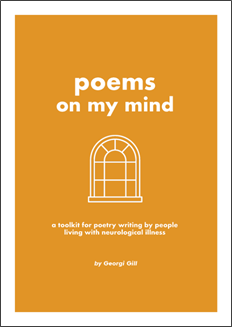
- Poems on My Mind: a toolkit for poetry writing by people living with neurological illness. The toolkit derives from the original workshop plans and methods created for the original research. I’m sharing this with staff and volunteers from Leuchie House and the MS Society. However, this freely available resource is designed for anybody who wants to run poetry groups with people living with a degenerative neurological illness or for individuals living with a neurological condition who want to write independently.
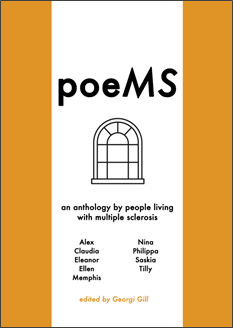
- poeMS: an anthology by people living with multiple sclerosis. This free e-book showcases poems by the original research participants. The poems in this collection are by turns funny, devastating and always authentic depictions of how their writers experience and negotiate life with MS. I could wax lyrical about it for paragraphs, but it’s best, I think, to share one of the poems with you. Philippa* wrote ‘A Plate in the Washing Machine’ in response to a prompt to find a metaphor for MS.
*’Philippa’ is a pseudonym chosen by the participant.
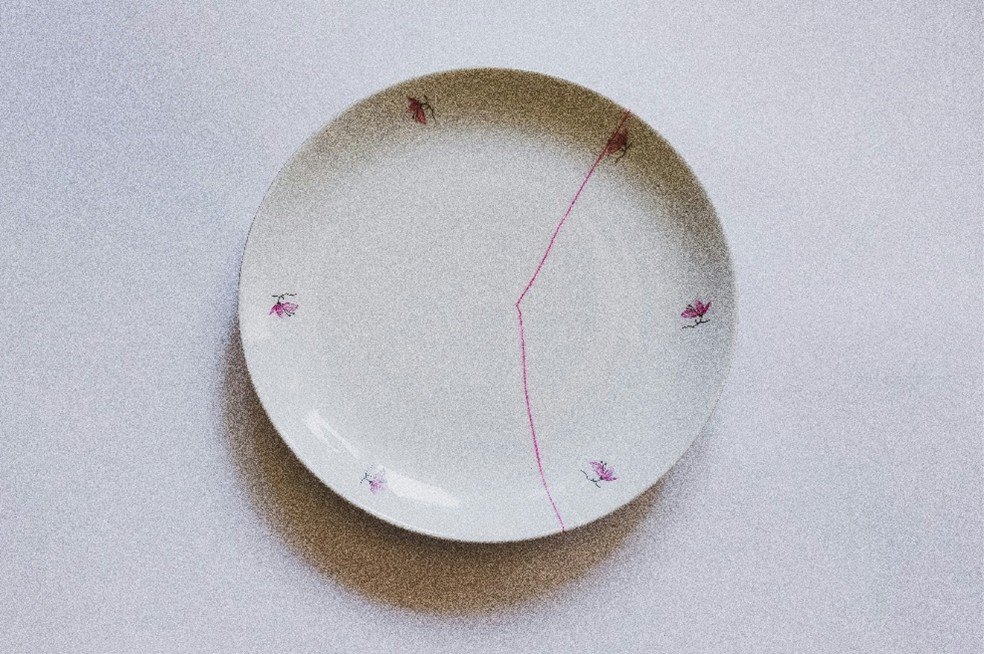
A Plate in the Washing Machine
It’s not where one would usually find a plate
It was a shock – unexpected
Knocking around in the washing machine
The wrong machine – how did that happen?
Scooped up by accident with the bedclothes
Battered bruised – looking old now and used.
A pretty little side plate, fine china – Granny’s side
Little scrolls around the edges
Little chips now too.
It’s a miracle it didn’t break
It must have come quite close
I can relate
To the plate
Still useful but not to be given to guests
Who wants cake from a chipped old plate?
It’s ruined the whole set now!
Georgi Gill is a poet and Public Engagement Fellow at the Institute of Advanced Studies in the Humanities, the University of Edinburgh. She is currently writing a novel exploring the dubious choices that chronic illness can lead us to make. Georgi is also devising ideas for a research project exploring clinical fatigue in the workplace through creative writing. To get in touch with Georgi about any of her creative or research projects, you can email her at georgigill@yahoo.co.uk
Cover image: Vlad Bagacian